

Small businesses operate on thin margins, lean teams, and limited resources. When policy shifts or disasters strike, they absorb the impact first and carry it longest.
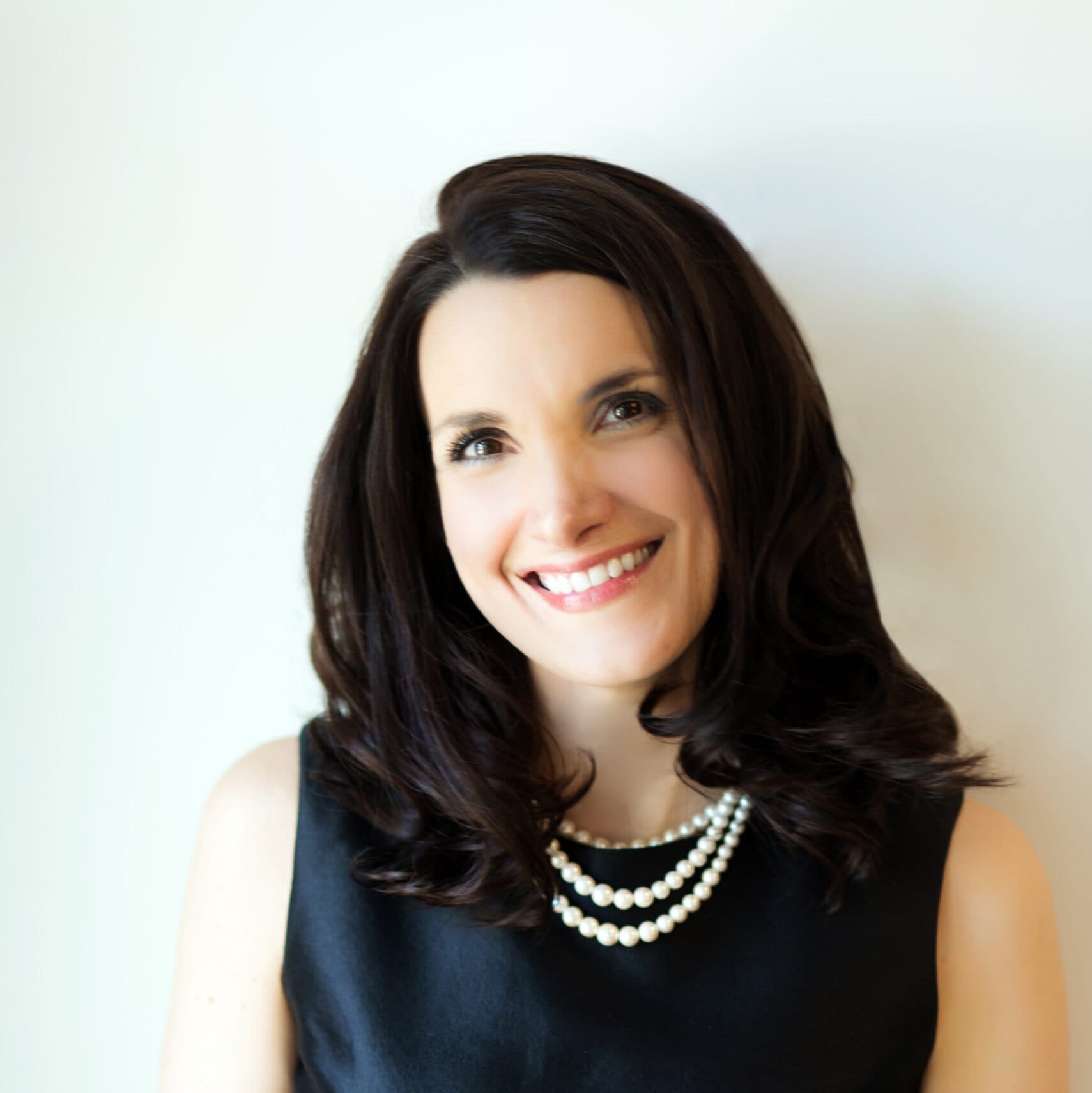
In the latest Ecosystem Talks, Kristen Fanarakis, Associate Director for Small Business, Entrepreneurship, and Economic Growth at the Milken Institute, joined EcoMap CEO Sherrod Davis to discuss how economic developers can help small businesses weather uncertainty. Fanarakis brings perspective as both a researcher tracking macro forces and a small business owner navigating them directly.
The conversation moved beyond generic resilience talk to examine specific frameworks communities can use to strengthen their local economies when outside support becomes unreliable.
What Is the Biggest Systemic Challenge Facing Small Businesses Right Now?
Fanarakis pointed to policy volatility as the defining challenge of the moment.
“Small businesses simply do not have the same level and depth of resources that large businesses have,” she said. “Large businesses have big balance sheets. They have an easier time with access to capital. They usually have cheaper access to capital.”
The issue extends beyond tariffs, though those have dominated headlines. It includes the unpredictability of whether programs will continue, whether government agencies will remain operational, and whether funding streams will survive budget cycles.
Fanarakis cited an example from Asheville. Mother Earth, an organization serving the community, shut down after a government program that bought significant amounts of their produce was eliminated. The business lost a major revenue source overnight.
“That policy volatility is a big systemic issue, and we don’t have an easy measure for it,” she said. “Once upon a time, the stock market kind of could have been a good measure for that volatility, but we really have a disconnect between the stock market and what I think of as the real everyday economy.”
What Is the Disconnect Between National Policy and Main Street Reality?
Fanarakis described a gap between rhetoric around reshoring and the actual policies supporting businesses trying to manufacture domestically.
“We have this entire conversation about reshoring, but we’re not seeing a lot of policies to support the businesses in order to do that,” she said.
Fanarakis owns an apparel company where everything is made in the United States. She grew up in North Carolina and remembers when NAFTA obliterated the state’s textile industry. The current conversation around bringing manufacturing back hits close to home.
“Those small businesses need far more support than what we are seeing,” she said. “I think that is the biggest disconnect between the rhetoric that’s out there and what is actually going on.”
For economic development professionals, she recommended looking critically at what is being said versus what the actual policies mean. The environment has grown more complicated than it has been in a long time.
How Should Economic Development Professionals Think About Building Resilience?
Fanarakis believes communities need to focus on building local and regional resilience rather than looking outside for investment.
She described a situation involving a family member who owns a restaurant in a small town. The town gave tax credits to outside franchises moving into the area, but offered nothing to local businesses trying to expand.
“My cousin was trying to expand his restaurant. He received no credits, and he actually probably does more business, and he’s not going to leave that community,” she said. “He’s going to find a way to continue to grow his business in that community. Whereas we all know what the statistics are. If that franchise is not doing X threshold of business, that franchise is gonna cut and run.”
She wants to see communities looking internally at their entrepreneurs and companies rather than drawing people from outside. The goal should be to keep dollars flowing regionally.
“We know the dollars spent internally, they’re recycled,” she said. “It’s just much more powerful. And it’s a huge benefit to those small businesses because that’s who’s usually benefiting from this. And it’s better for the communities, it’s better for the regions.”
The approach requires a mindset change in how communities think about economic development.
What Is the York Plan and Why Does It Matter?
Fanarakis introduced the York Plan, a framework from World War II that offers a model for how communities can mobilize local resources effectively.
York, Pennsylvania was an industrial town made up largely of small companies. When the war required all resources to be directed toward the war effort, the town created a plan to figure out how to win government contracts.
“They basically created this plan to look at all of these things, but it’s effectively ecosystem mapping,” Fanarakis said. “It is really understanding what resources that you have, taking stock of them and figuring out what you need, what you have to improve on, and how do you mobilize them, and how do you use them most effectively.”
The plan’s motto was, “Do what you can with what you have.”
The framework included:
Making use of present facilities
Getting idle tools and workers active
Assisting in educational work to train new employees
Studying labor potential
Taking steps to supply additional labor where needed
How Does the York Plan Translate to Today’s Economy?
Fanarakis walked through how the principles apply to current challenges.
“We think about the modern economy and what are the needs,” she said. “You have a lot of digital needs. You have bricks and mortar companies that don’t know how to get online.”
She used herself as an example. She runs an e-commerce company. When she needs a developer, she goes to Upwork. It would be better if there was an easier way to find someone locally.
“If we had a way to pull our resources closer to home, to figure out who are all these people, we have all these needs,” she said. “I’m sure I have X, Y, Z businesses that need digital help, but they have to look outside and look at all these other places to find help.”
If communities used resources closer to home and kept those dollars circulating locally, that would be smart economic development. But first you have to know where those resources are.
“I wouldn’t know how to find a local developer,” Fanarakis said. “I’m not plugged into my local tech developer economy in Arlington. I wouldn’t know where to start. Back in the day, you would just open the yellow pages to find these people, and now we have this really disparate economy.”
Davis noted that this is where ecosystem mapping becomes essential. Understanding what resources exist locally makes it possible to connect businesses that need help with the people who can provide it, without defaulting to national platforms.
Why Should Communities Think of Small Businesses as Disaster Resilience Infrastructure?
Fanarakis made a case that many economic developers may not have considered. Small businesses are often the first responders when disasters hit.
She was living in Asheville just months before Hurricane Helene devastated the area. She followed what happened in real time on social media.
“One of the examples I always give is the pet store where I would buy my dog’s pet food,” she said. “They were supplying, for people who lost everything, they were giving away their inventory. Their suppliers were shipping in pet food, and they were really on it.”
Breweries bottled their water because the water system was shut down. The city had no water for two and a half months until they could start shipping it in by air. Local businesses with chainsaws and equipment spent weeks helping clear debris so people could get medicine.
“Every small business, all of these small businesses that I patronize and know, these were the people who were stepping up first,” Fanarakis said.
She described a landscaper who spent a month helping clear debris without taking any money because it was the right thing to do. He later faced eviction because he didn’t take payment.
“Cities need to invest in preserving small businesses,” she said. “They help you recover. They reduce the government burden on recovery, yet they get nothing.”
FEMA estimates that 65 to 90 percent of small businesses close after a disaster hits. These are the businesses helping communities recover, yet they receive the least support.
What Can Cities Do to Support Small Businesses as Disaster Infrastructure?
Fanarakis recommended policy-level changes that compensate businesses for their contributions during recovery.
“How can cities compensate them for that time, money, effort?” she said. “Can they have a grant fund for this? If you did X as part of the recovery, you’re eligible for a $10,000 grant, whatever it is.”
She suggested tiering the support depending on level of contribution. The goal should be recognizing that these businesses are running on the lowest margins.
Cities should consider:
Grant funds for businesses that contribute to recovery efforts
Tax credits for donating inventory or services
Tiered support based on contribution level
Centralized information hubs created before disasters strike
Beyond grants, communities should think about tax credits or other mechanisms that acknowledge the role small businesses play when everything breaks down.
How Should Small Businesses Think About Disaster Planning?
Fanarakis wrote about how every small business needs to think through what happens if disaster hits, regardless of location.
COVID effectively destroyed her business. She makes women’s workwear. A global pandemic that made everyone sit at home and not buy workwear for three years was not in her scenario planning.
“That’s a business model risk. That is a concentration risk in your business model that I did not think about when I opened the business,” she said.
She encourages every small business owner to do risk analysis and scenario planning. What happens if you don’t have sales for two years? What are the stress tests if different situations occur?
“We’re living in a world where disasters are hitting in more places and places that we don’t expect, or a pandemic that affects everybody in different ways that we can’t predict,” she said.
She’s a pretty good macro predictor, but a global pandemic shutting off her sales for two and a half years was not on her bingo card.
Why Is Centralized Information So Important After a Disaster?
One of Fanarakis’s recommendations for communities is understanding networks ahead of time and knowing who’s there.
After Helene, people created networks on the fly. If those networks already existed with a centralized hub of information, communities would be one step ahead.
She talked to a restaurant owner in Asheville who described how local restaurants had to bring in huge water tanks at $20,000 each to set up, costing $1,000 to $5,000 per day to run.
“You’ve gotta sell a lot of chicken or biscuits or bread to break even on that,” Fanarakis said.
The owner told her how they went into a water sharing agreement with a group of restaurants to figure it out. That kind of coordination would be easier if there was a preset place where everybody already knew how to connect.
“If there was an easy way that everybody knew, all the local restaurants in Asheville already know everybody’s right here,” she said. “Everybody’s going through the same thing. I think that puts you one step ahead.”
She saw a house in her old neighborhood that posted all information on a clothesline attached to their fence after the storm. It became a neighborhood bulletin board for where to get water, where to take a shower, and where to find resources.
“That’s what you do,” she said. “That central hub of information is just crucial to put people ahead of the game.”
What Is the Most Important Action Economic Developers Can Take Right Now?
Davis asked Fanarakis what single action economic developers should prioritize for 2026.
Fanarakis recommended using resources like EcoMap to look at what communities have and accept that we’re all going into another uncertain year.
“We’re all going to have to look internally, and so we’re going to have to look at what do we have and try to do what we can with what we have,” she said.
She encouraged people to do a quick search on the York Plan to read more about it for additional perspective.
“I think we have to accept that we’re in a different regime, we’re in a different environment where we don’t know whether outside resources are coming, if they’re gonna be there,” she said. “And if they’re not there, how do we build internally? How do we build regionally? How do we find those alliances regionally?”
It means going back to how things used to be in some ways.
What Trends Is Fanarakis Watching in 2026?
“So many,” Fanarakis said.
Part of the challenge is that everything moves so quickly that what’s relevant this month may not be relevant next month.
She’s watching inflation closely. As a small business owner, she knows it’s hard to pass those prices on. Small businesses don’t have as much pricing power as larger counterparts.
“The economist in me would say I’m really watching inflation,” she said. “That is obviously tied to tariffs and back to my policy volatility.”
She would love to see some moderation and stability on that front.
Watch the full webinar on YouTube.
About the Speaker
Kristen Fanarakis is Associate Director for Small Business, Entrepreneurship, and Economic Growth at the Milken Institute, where she leads research on macroeconomic and systemic trends affecting American small businesses and startups. She began her career in investment management at Putnam Investments before moving to Wall Street, where she worked in foreign exchange sales and trading at Merrill Lynch, Citibank, and Morgan Stanley, covering leading institutional quantitative currency investment managers.
After leaving Wall Street, she co-managed the University of Maryland’s Center for Financial Policy, a Washington, DC-based think tank focused on the intersection of financial markets and regulatory policy. She founded Senza Tempo, a Los Angeles-made women’s luxury apparel brand focused on domestic manufacturing. As a founder, she regularly wrote and spoke on policy issues facing the domestic apparel industry, has been quoted in the press, testified before the California State Senate on behalf of other domestic apparel brands, and advocated for domestic manufacturing.
Fanarakis holds a BA in economics and political science from the University of North Carolina at Chapel Hill, an MBA from UNC-Chapel Hill’s Kenan-Flagler School of Business, and an MS in international economics from Suffolk University.
Frequently Asked Questions
How do small businesses prepare for disasters?
Small businesses should conduct risk analysis and scenario planning that goes beyond typical disaster preparation. This includes stress testing what happens if sales stop for extended periods, identifying concentration risks in the business model, and building relationships with local partners before disasters hit. Every business, regardless of location, needs a plan for unexpected disruptions like pandemics, natural disasters, or policy changes that affect their supply chain or customer base.
What is the York Plan economic development model?
The York Plan was created in York, Pennsylvania during World War II when the industrial town needed to win government contracts to support the war effort. The plan focused on taking inventory of local resources, identifying gaps, mobilizing existing assets effectively, and connecting businesses to share capabilities. Its motto was “Do what you can with what you have.” It’s essentially early ecosystem mapping that helped a community maximize local resources when outside support became unreliable.
Why do small businesses close after disasters?
FEMA estimates 65 to 90 percent of small businesses close after a disaster. Small businesses operate on thin margins with limited cash reserves and no cushion to absorb extended closures or revenue loss. Unlike large corporations with big balance sheets and cheaper access to capital, small businesses lack the financial resources to weather prolonged disruptions while still covering fixed costs like rent, utilities, and payroll.
How can cities support small businesses during emergencies?
Cities should establish grant funds that compensate small businesses for contributing to disaster recovery efforts, whether donating inventory, providing services, or using equipment to help communities. Tax credits and tiered support based on contribution level can help businesses that step up during emergencies without jeopardizing their own financial stability. Creating centralized information hubs before disasters hit also helps businesses coordinate and share resources more effectively during recovery.
What is policy volatility and how does it affect small businesses?
Policy volatility refers to rapid, unpredictable changes in government programs, regulations, and support systems. Small businesses struggle with this uncertainty because they lack the resources large corporations have to adapt quickly. When programs shut down unexpectedly, funding streams disappear, or regulations change without warning, small businesses absorb the impact directly and often can’t recover as easily as larger competitors with deeper cash reserves and more flexible supply chains.
How do you build local economic resilience?<
Communities build resilience by investing in local businesses rather than prioritizing outside investment, creating systems to identify and connect local resources, and keeping dollars circulating regionally. This means knowing what capabilities exist locally, making it easier for businesses to find each other and collaborate, and recognizing that supporting existing businesses often delivers more lasting impact than attracting outside companies that may leave when conditions change.